Introduction
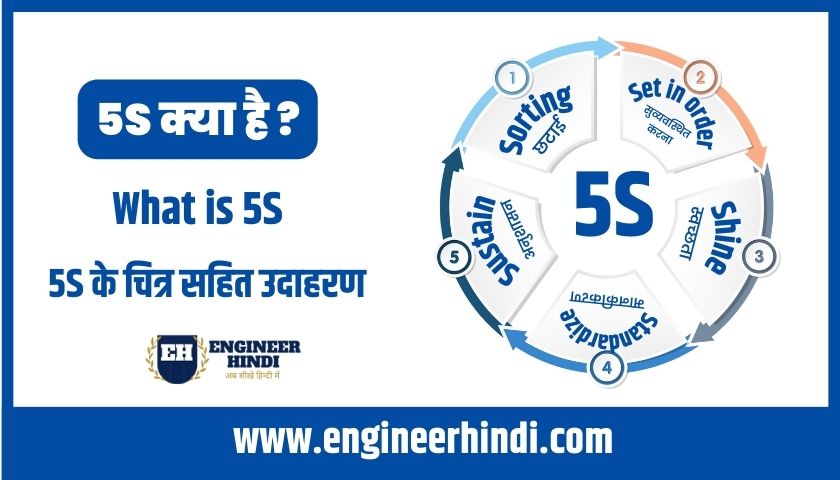
5S System एक Japanese Tool है, जिसका उपयोग Workplace Management के लिए किया जाता है। इसमें 5 शब्दों (Sort, Set in order, Shine, Standardize, Sustain) की एक सूची होती है।
5S methodology से workplace organized, clean और efficient बनता है। Productivity 15-30% तक बढ़ सकती है।
5S Full Form in Hindi
| S.No | English | Hindi | Japanese |
|---|---|---|---|
| 1 | Sorting | छटाई | Seiri |
| 2 | Set in Order | सुव्यवस्थित | Seiton |
| 3 | Shine | स्वच्छता | Seiso |
| 4 | Standardize | मानकीकरण | Seiketsu |
| 5 | Sustain | अनुशासन | Shitsuke |
5S का इतिहास
Japan में शुरुआत (1950s)
5S methodology की शुरुआत Toyota Motor Company में 1950s में हुई। Toyota Production System (TPS) के development के दौरान engineers ने यह systematic method बनाया।
India में आगमन (2000s)
Early Adopters (India):
- Tata Motors – Pune, Jamshedpur
- Maruti Suzuki – Gurgaon, Manesar
- Mahindra & Mahindra
- Bajaj Auto
1. Sorting | छटाई – 5S का पहला Step
5s Methodology मे Workplace को पूरी तरह से सुव्यवस्थित रखने के लिए हम उपयोग में आने वाले ओर उपयोग नहीं आने वाले सामानों की छटाई कर देते हैं। हम केवल उन्हीं सामानों को कार्य करने की जगह पर रखते है जिनका हमें वहां पर काम होता है, बाकी सभी दूसरे अन्य सामानों को वहां से दूर कर देते हैं।
Sorting में कुछ बातों का ध्यान रखना चाहिए:
1. Not Needed at All (बिल्कुल जरूरत नहीं)
ऐसे सामान जो कि हमें बिल्कुल नहीं चाहिए, जिनका हमें कोई उपयोग नहीं है, उन्हें हटा देना चाहिए।
- Defective Parts को अलग कर देना चाहिए
- Scrap Material हटा देना चाहिए
- Broken tools जो repair नहीं हो सकते
- Obsolete documents (3+ years old)
2. Needed But Not Now (जरूरत है पर अभी नहीं)
ऐसे सामान जो हमें चाहिए तो पर उनकी जरूरत अभी नहीं है तो उन्हें अलग कर दें। इन्हें storage area में properly organize करके रखें।
3. Needed But Not Here (यहां नहीं चाहिए)
हमें यह सामान चाहिए तो पर यहां पर नहीं, तो उन सामान की जहां पर जरूरत है, उन्हें वहीं पर ही रखें।
4. Needed But Not So Much Quantity
ऐसे सामान जिनकी जरूरत तो है लेकिन कम मात्रा में तो, इस बात का ध्यान रखें कि जो सामान की जितनी जरूरत है, उसे उतनी ही मात्र मे रखें।
Red Tagging System – Visual Sorting Mechanism
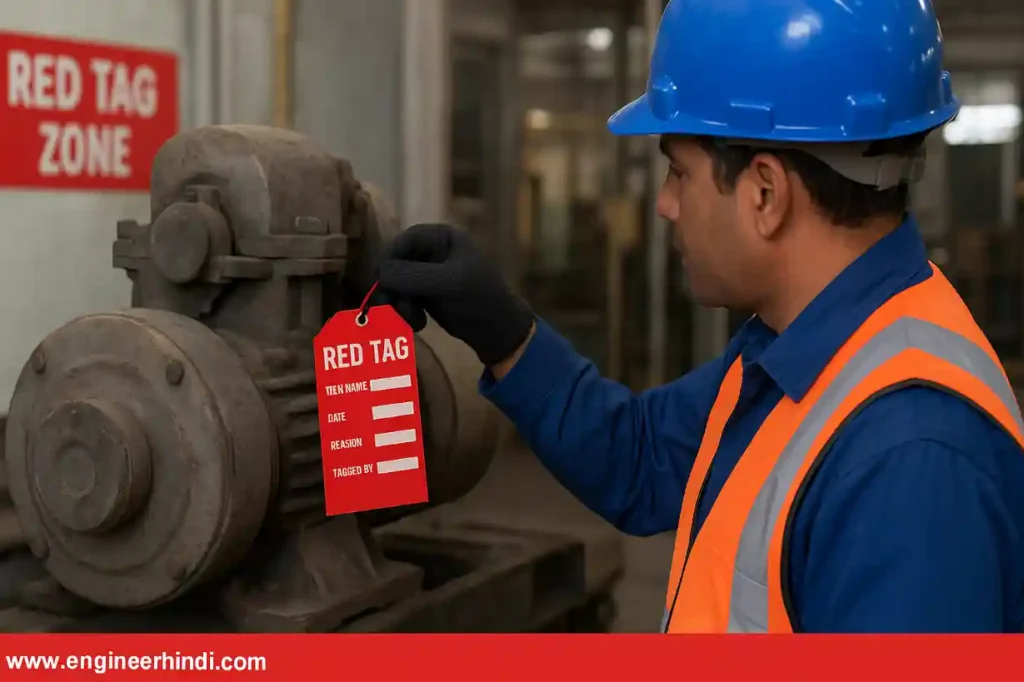
Sorting में Red Tagging का भी उपयोग किया जाता है। Red Tagging एक Visual Sorting Mechanism है। 5S Methodology जहां पर implement किया जाता है, वहां पर एक Red Tagging Zone बनाया जाता है। Red Tag को उन सामान पर लगाया जाता है, जिनका हमें उपयोग नहीं होता है।
Red Tag Process:
- Identify: Item को identify करें
- Tag: Red tag लगाएं (Item name, Date, Reason, Tagged by)
- Move: Red tag zone में move करें
- Wait Period: 30 days wait period
- Decision: Use नहीं हुआ तो dispose/sell/scrap
| Use Frequency | Location | Action |
|---|---|---|
| Daily use | Work area में | Keep at workstation |
| Weekly use | Nearby | Keep accessible |
| Monthly use | Storage | Move to storage room |
| Rarely used | Red tag zone | 30 days wait |
| Never used | – | Dispose immediately |
Sorting के फायदे (Advantages)
Immediate Benefits:
- चीजों को ढूंढना आसान हो जाता है
- जिन वस्तुओ की जरुरत बार बार होती है, उनको हमारे नजदीक रहने से ढूढने में समय नहीं लगता
- जितनी वस्तुओं की जितनी मात्र मे जरुरत है, उतनी ही मात्र मे रखा जा सकता है
- स्पेस की बचत होती है (20-30% floor space free)
- समय की बचत होती है (Per shift 30-45 min saved)
- काम को करने में तेजी आती है
- काम करने की एक Process बन जाती है
- Labeling/Marking करके हम पता कर सकते है की कब किस स्टेज पर सामान Refill करने की जरूरत है
- Workplace अच्छा साफ दिखता है, जिससे काम को करने मे उत्साह और तेज़ी आती है
2. Set In Order | सुव्यवस्थित करना
“Place for everything and everything in its place”
हर चीज की जगह निर्धारित की जाए और उन चीजों को निर्धारित जगह पर ही रखा जाए
हां इसमें हम इसी बात का ध्यान रखते हैं, की हर एक वस्तु की एक जगह निर्धारित होना चाहिए और वह वस्तु उसी जगह पर होनी चाहिए। यदि उस वस्तु की जगह निर्धारित होगी तो उसे किसी भी व्यक्ति को ढूंढना नहीं पड़ेगा जिससे कि व्यर्थ समय बर्बाद नहीं होगा। इसके लिए हम चीजों को क्रम में जमा देते हैं, साथ ही हम साइन बोर्ड और Tag का भी इस्तेमाल करते हैं।
Set in Order के Main Principles:
1. Frequency-Based Placement (उपयोग के आधार पर)
| Use Frequency | Location | Distance | Example |
|---|---|---|---|
| Hourly/Daily | Arms reach | 1-2 feet | Assembly tools, Measuring instruments |
| Weekly | Walking distance | 5-10 feet | Spare parts, Maintenance tools |
| Monthly | Same area | 20-30 feet | Special jigs, Fixtures |
| Rarely | Storage room | Different area | Seasonal items, Archives |
2. Shadow Boards (छाया पटल)
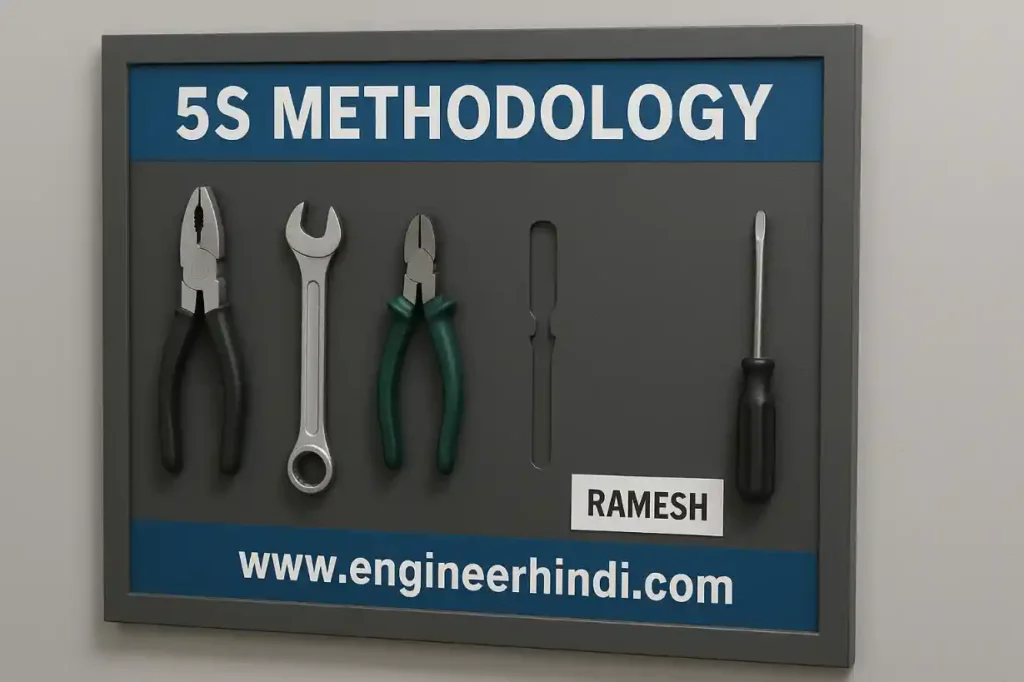
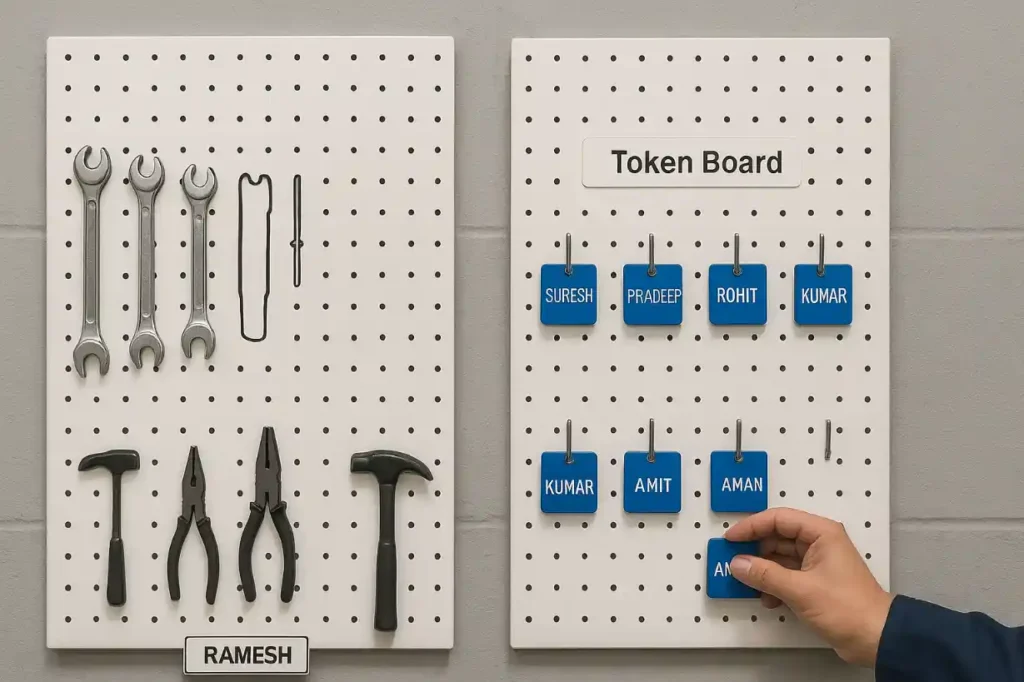
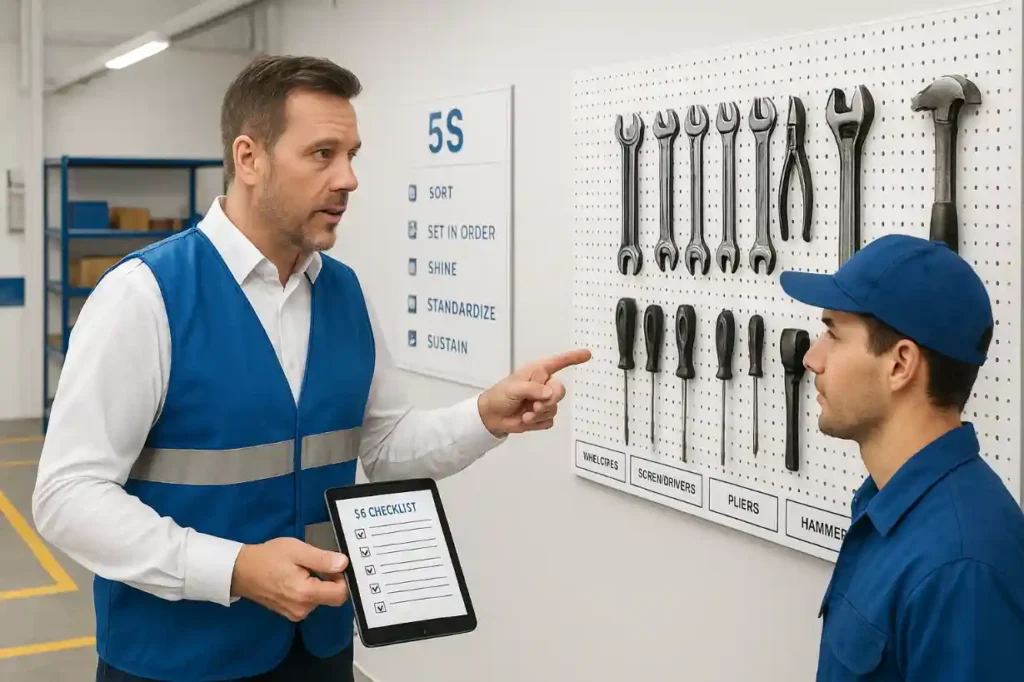
Shadow boards सबसे effective visual management tool है। इसमें tools की outline या shadow draw की जाती है, ताकि एक नज़र में पता चल जाए कि कोई tool missing है या नहीं।
Shadow Board बनाने के Steps:
- Board selection: Plywood/foam board (3-4 feet × 2-3 feet)
- Tool placement: Most used tools सबसे accessible position पर
- Outline drawing: Tool को board पर रखें और outline trace करें
- Color coding: Board को paint करें (background white, outline black)
- Labeling: Tool का name, code, size लिखें
- Mounting: Wall पर eye-level height पर mount करें
Cost: ₹5,000-15,000 per board (professional quality)
3. Floor Marking – Visual Workplace
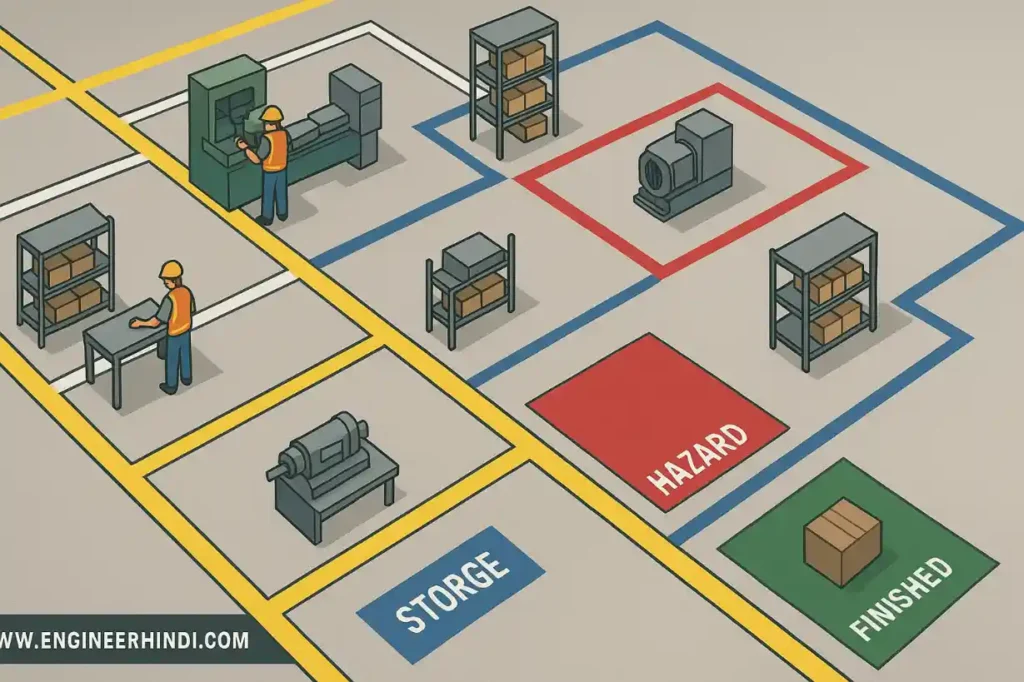
Floor marking से workplace को clearly defined zones में divide किया जाता है।
| Color | Purpose | Width |
|---|---|---|
| Yellow | Walkways | 2-3 inches |
| White | Work areas | 2 inches |
| Blue | Storage zones | 2 inches |
| Red | Hazard/Safety | 3-4 inches |
| Green | Finished goods | 2 inches |
4. Labeling System
- Part Bins: Part number, Part name, Location code, Min/Max quantity
- Tools: Tool name, Tool code, Return location
- Equipment: Equipment ID, Operator name, Last maintenance date
- Storage Racks: Rack-Shelf-Bin numbering (Example: PROD-A-2-5)
Benefits of Set in Order | सेट इन ऑर्डर के फायदे
- चीजों को ढूंढने में बहुत ही कम समय लगता है, क्योंकि सभी वस्तुएं व्यवस्थित क्रम में रखी होती है (70-90% reduction)
- नाम का Token बोर्ड पर लगा होता है, तो उस Worker की जिम्मेदारी बन जाती है, उस सामान को वापस वही पर सुरक्षित रखने की
- काम में आने वाली सभी वस्तुओं को आसानी से इधर से उधर ले जा सकते है
- कोई भी अन्य व्यक्ति चाहे वह नया हो या पुराना वह आसानी से वस्तु को ढूंढ सकता है
- समान के क्रम में होने के कारण कौन सी वस्तु कहां है, यह हम आसानी से जान सकते है
- Visual management बेहतर होती है
- Training easier: New employees को समझने में आसानी
Shadow Board + Token Board Example
आइए इसे हम एक Example से समझते हैं:
मान लीजिए की workers को Tool को ढूंढने में problem हो रही है। इसके लिए हम एक Shadow Board तैयार करेंगे जिस पर हम सभी Tool को लगा देंगे। इससे हमारे Space की बचत होगी साथ ही Tool को search करने में आसानी होगी।
Token Board System:
इसके साथ ही हम एक Token Board भी लगाएंगे जिस पर सभी workers के नाम का एक token लगा होगा। अब यदि किसी worker को किसी Tool की जरूरत है, तो:
- वह वहां से Tool को उठाएगा
- अपने नाम का token लगा देगा
- अगर उसी Tool की जरूरत किसी दूसरे worker को हो तो, वह token को देख ले
- उसे पता चल जाए कि वह tool किस दूसरे worker के पास है
Result: Zero tool loss + Full accountability + Quick identification!
3. Shine | स्वच्छता – 5S In Hindi
5S Methodology मे 3rd “S” का मतलब होता है Shine अर्थात स्वच्छता। हमें अपने Organization या Working Area को साफ एवं स्वच्छ रखना चाहिए। Shine का मतलब है workplace और equipment को साफ-सुथरा रखना। इसमें सफाई के साथ-साथ Inspection भी किया जाता है।
⚠️ Important: Shine = 50% Cleaning + 50% Inspection
केवल साफ करना ही काफी नहीं है, problems को identify करना भी जरूरी है!
Shine में इन बातों का ध्यान रखना चाहिए:
- अपने Workplace को पूर्ण तरीके से साफ सुथरा रखे
- सफाई के लिए समय-समय पर इंस्पेक्शन करें
- मशीनों पर काम में आने वाले औजारों और उपकरण को साफ करते रहना चाहिए
- सफाई के लिए साइन बोर्ड का उपयोग करें
- सभी मशीनो के Oil लीकेज को सही तरीके से रोकना चाहिए
- Workplace पर सेफ्टी का ध्यान रखना चाहिए और उसे क्लीन रखना चाहिए
Daily Cleaning Routine (रोज़ाना की सफाई)
Last 15 Minutes of Shift – 5S Time:
| Time | Activity | Responsible |
|---|---|---|
| 0-5 min | Work area sweep/mop | Operator |
| 5-10 min | Tools clean और shadow board पर return | Operator |
| 10-12 min | Machine wipe down, Control panel clean | Operator |
| 12-14 min | Scrap disposal, Tomorrow’s prep | Operator |
| 14-15 min | Quick inspection और handover | Operator |
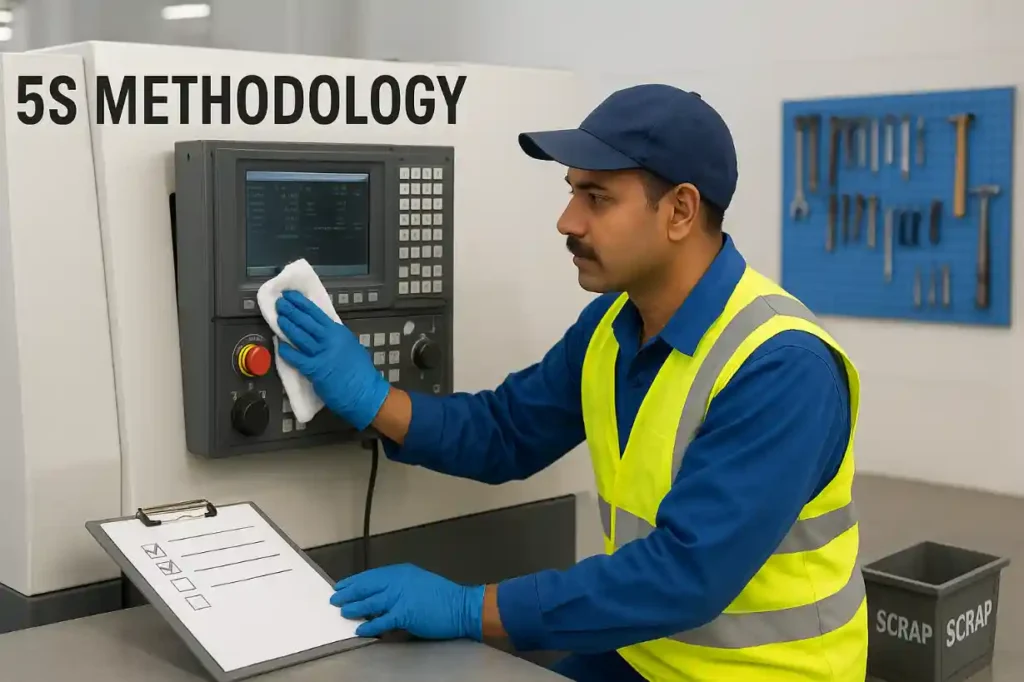
Last 15 minutes of shift: Cleaning और inspection routine – CNC machine maintenance
Inspection During Cleaning
जब आप cleaning करते हैं, तो equipment को closely देखने का मौका मिलता है। निम्न चीज़ें check करें:
Daily Inspection Checklist:
- Oil Leaks: Hydraulic lines, Lubrication points check करें
- Loose Parts: Bolts, nuts tighten करें
- Worn Parts: Belts, chains, bearings की condition देखें
- Abnormal Sounds: Grinding, squeaking sounds note करें
- Abnormal Smells: Burning smell check करें
- Vibrations: Excessive vibration identify करें
- Safety Hazards: Exposed wires, Sharp edges report करें
कुछ नियम – 5s Principles
- अगर हमारे सामान कम रहेंगे तो साफ सफाई करने में आसानी होगी
- जब सफाई करें तो हमें पता होना चाहिए कि किस प्रकार सफाई की जानी चाहिए
- Gauge को ज्यादा टाइट तरीके से ना साफ करे
- Electronic उपकरणों को ध्यान से साफ करना चाहिए
- क्लीनिंग के साथ इंस्पेक्शन भी करे
- सभी चीजे ठीक तरह से जुड़ी हुई है, कहीं कोई Part या वायर ढीली तो नहीं है
- सफाई के बाद चीजों को उसी क्रम मे रखे
Benefits of Shine | स्वच्छता के फायदे
- साफ सफाई रखने से कंपनी में बाहरी व्यक्ति या कोई भी विजिटर आता है, तो उसे कंपनी के Standard के बारे में पता चलता है इससे कंपनी की Reputation बढ़ती है
- मशीनों और काम करने वाले उपकरण को समय-समय पर Maintenance मिल जाता है, जिससे उनकी life बढ़ जाती है और वह ठीक तरीके से काम भी करते हैं
- साफ सफाई रखने से workers में काम करने की इच्छा शक्ति बढ़ जाती है और वह ठीक तरीके से काम करते हैं
- साफ सुथरा माहौल customer और workers के मन में एक positive सोच को जन्म देता है
- Machine breakdowns कम होंगी (Predictive maintenance)
- Product quality improve होगी
- Safe working environment बनता है
- Problems early stage में identify होती हैं
- Equipment life बढ़ती है
4. Standardize | मानकीकरण – 5S In Hindi
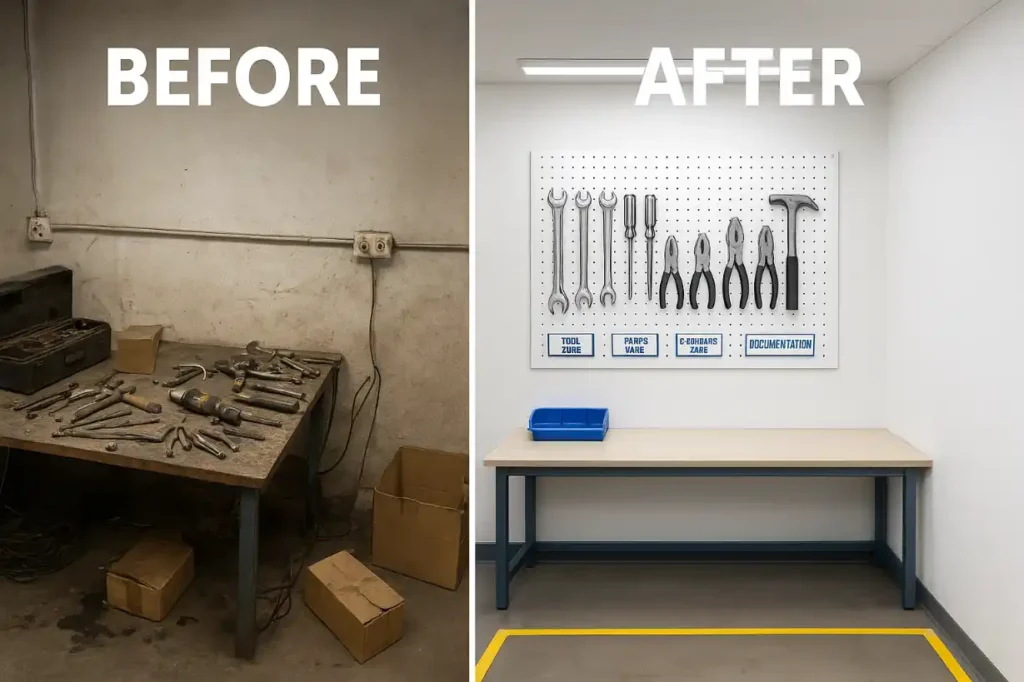
Standardization का मतलब है कि पहले के तीन S (Sort, Set in Order, Shine) को standards बनाकर उन्हें maintain करना। यह ensure करता है कि सभी लोग same way में काम करें।
चीजों को उनके Standard के हिसाब से बांटना या किसी Process के होने का एक pattern तैयार करना जिसमे हम इस बात को निर्धारित करते है, की कौन सी चीज कैसी होगी, उसका Sign किस प्रकार का होगा या उसका color किस प्रकार का होगा। 5S Methodology मे चीजों का Standardization करना इसे बहुत मजबूती प्रदान करता है।
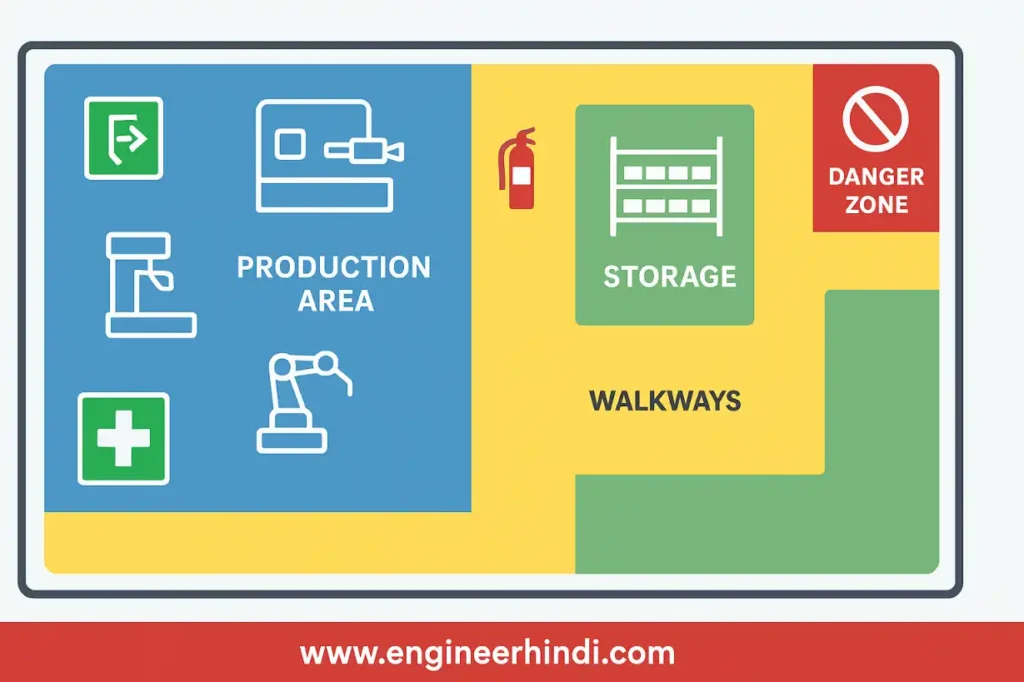
जैसे किसी Industrial Map में अलग-अलग चीजों को Different Sign Board लगाकर बताया जाता है, जैसे की Danger Board, Do Not Enter Board, Process Direction etc।
Standardization के Components:
1. Standard Operating Procedures (SOPs)
- हर S के लिए written procedure बनाएं
- Photos के साथ document
- Step-by-step instructions दें
- हर 6 months में review और update करें
2. Visual Management
Color Coding System:
| Color | Meaning | Use |
|---|---|---|
| Red | Danger/Stop | Emergency equipment, Hazard zones |
| Yellow | Caution | Walkways, Warning signs |
| Green | Safe/Go | Safe zones, First aid |
| Blue | Information | Storage areas, Instructions |
3. Checklists बनाएं
- Daily Checklist: Operators के लिए (5 min)
- Weekly Checklist: Supervisors के लिए (30 min)
- Monthly Checklist: Management के लिए (2 hours)
4. Photo Boards & Industrial Mapping
Ideal state की photos display करें workplace में। यह visual reference के रूप में काम करता है।
Industrial Map Example:
सबसे पहले तो आप एक Industrial Map को imagine करें जिसमे की सभी चीजों को अलग-अलग Sign बनाकर बता दिया गया है। अब हम आसानी से पता कर सकते है की कौन सी चीज कहाँ पर है।
5. Responsibilities और Accountability
हमें इन बातों का ध्यान रखना चाहिए:
- सभी की Responsibility fix करें कि कौन किस काम को करेगा
- अलग-अलग Zone बनाकर Responsibility दें
- इसको एक Routine बना दें
- सारे system को check करते रहें कि यह ठीक से काम कर रहा या नहीं
Standardization के फायदे:
- Consistency बनी रहती है
- Training easier हो जाती है
- Best practices documented होते हैं
- Quality maintained रहती है
5. Sustain | अनुशासन – 5S In Hindi
⚠️ Critical: बिना Sustain के, 95% implementations 6 months में fail हो जाते हैं!
Sustain सबसे challenging और सबसे important S है।
Sustain का मतलब है पहले चार S को लगातार follow करना और उसे habit बना लेना। यह एक continuous improvement process है।
हमने 5S Methodology मे सभी “S” को Implement कर दिया है, तो हमें अब Sustain मतलब कि अनुशासन की भी जरूरत होगी क्योंकि बिना अनुशासन के कोई कार्य नहीं होगा फिर हम चाहे कितने भी System क्यों ना बना लें। तो सबसे जरूरी होगा कि काम अनुशासन मे हो।
कुछ नियम – 5s Principles for Sustain:
- Daily Monitoring करें – 5S में किस प्रकार का Progress हो रहा है, लोग काम कर रहे हैं या नहीं इसे Monitor करें
- Area Divide कर दें और Area Zonal Leader बना दें
- Red Tag Campaign चलाएं जिसमें Unwanted चीजों को Identify करें और उन्हें हटा सकें
- Fix Point Photographs का उपयोग करके Before and After का फोटो दिखा सकते हैं। जिससे क्या Improvement किया गया है, वह पता चलेगा
- सभी लोगों को 5S के बारे में बताएं कि, यह हम क्यों कर रहे हैं इससे क्या फायदे होंगे
- 5S के लिए सभी को Training देनी चाहिए
- Monthly Audit करवाना चाहिए
- Motivation के लिए हमें Reward देना चाहिए
Sustain के लिए Key Activities:
1. Regular Audits (सबसे जरूरी)
| Frequency | Auditor | Duration | Focus |
|---|---|---|---|
| Daily | Operator self-check | 5 min | Own area quick check |
| Weekly | Supervisor | 30 min | Detailed inspection |
| Monthly | Management | 2 hours | Complete review + scoring |
2. Training और Communication
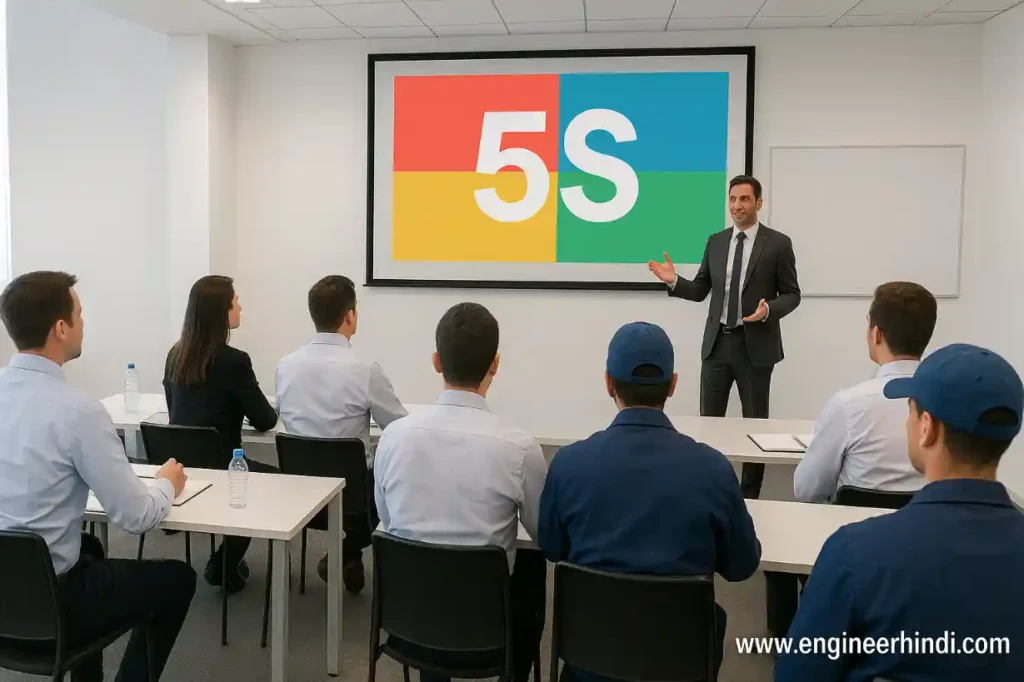
- Weekly Toolbox Talks: 10 min – 5S updates
- Monthly 5S Meeting: 30 min – Results review
- New Employee Training: 1 hour – 5S basics
- Refresher Training: Every 6 months
3. Recognition Program
Award System:
- Best 5S Area Award (Monthly): ₹5,000 + Certificate + Trophy
- 5S Champion Award (Quarterly): ₹10,000 + Certificate
- Photos in Newsletter: Recognition visibility
- Management Appreciation: Personal recognition
4. Continuous Improvement
- Suggestion box for improvements
- Kaizen events quarterly
- Before/after photos showcase
- Success stories sharing
How To Implement 5s Method | 5S को कैसे लागू करे:
Implementation के Important Steps:
- 5s Process मे लेने से पहले आप अच्छी तरीके से Analyze करें की इसे कहां पर और कैसे Implement करना है
- किन चीजों को रखना है, और किन चीजों को हटाना है अलग-अलग करें
- 5s Process मे यह निर्धारित करें कि जिन चीजों को हटाना है, उन्हें कैसे हटाएं
- चीजों की Indexing करें, Labeling करे, Identification करें, और उनकी Marking करें
- 5s Process के द्वारा जो भी बदलाव करें उनके बारे में सबको बताएं
Step-by-Step Implementation Plan:
- Management Commitment: Top management का support लें, ROI presentation दें
- 5S Champion: Senior person appoint करें (authority के साथ)
- 5S Team: Cross-functional team बनाएं (5-7 members)
- Training: सभी levels को train करें (Management, Team, Operators)
- Pilot Area Selection: छोटे area से शुरू करें (high visibility)
- Implementation: 12-week plan follow करें (week-wise breakdown)
- Audit System: Regular monitoring setup करें (Daily, Weekly, Monthly)
- Recognition: Awards और rewards program start करें
- Expand: Success के बाद दूसरे areas में expand करें
- Sustain: Continuous improvement culture develop करें
5S Implementation – 12 Week Roadmap
सबसे बड़ी problem: “कहां से शुरू करें?”
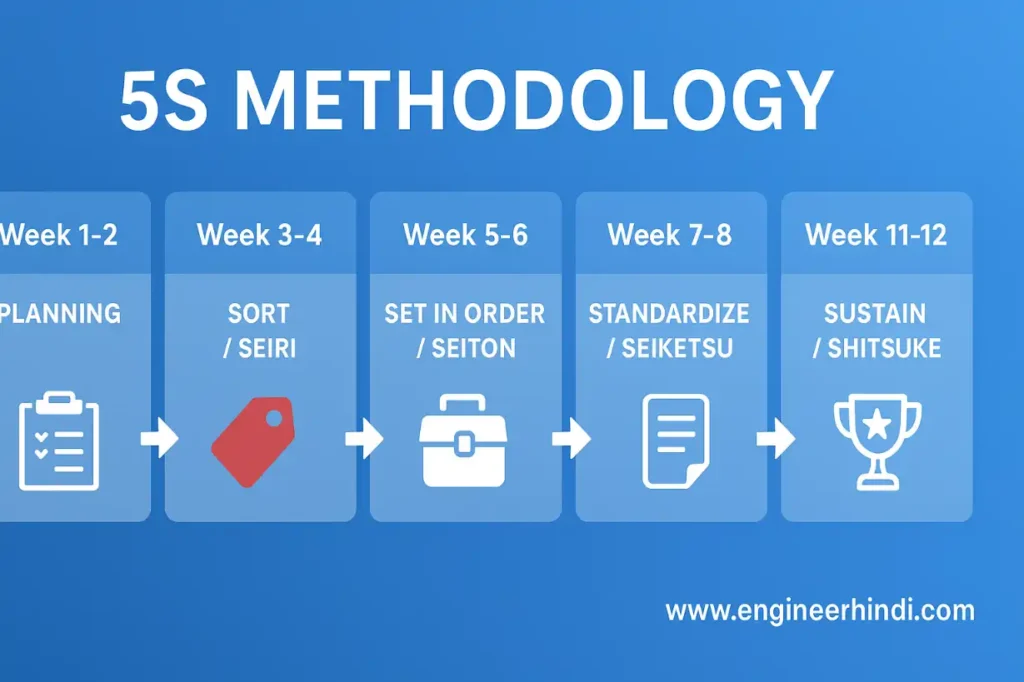
| Week | Phase | Activities |
|---|---|---|
| 1-2 | Planning | Team बनाएं, Training, Budget ₹50K-2L |
| 3-4 | Sorting | Red tag event, 20-30% items remove |
| 5-6 | Set in Order | Shadow boards, Labeling, Floor marking |
| 7-8 | Shine | Deep cleaning, Standards document |
| 9-10 | Standardize | SOPs बनाएं, Photo boards |
| 11-12 | Sustain | Audit system, Recognition program |
Investment: ₹70,000 | ROI: 3-6 months | Success Rate: 85%+
5S Audit System
Challenge: कैसे maintain करें?
Answer: Regular Audits!
25-Point Checklist
हर S के लिए 5 points = Total 25 points
1. SORT (छंटाई) – 5 Points
- क्या सभी unnecessary items remove हो गई हैं? (0-5)
- क्या red tag zone properly maintained है? (0-5)
- क्या inventory levels appropriate हैं? (0-5)
- क्या broken/obsolete items identify होते हैं? (0-5)
- क्या personal items designated place पर हैं? (0-5)
2. SET IN ORDER (सुव्यवस्थित) – 5 Points
- क्या हर item की fixed location है? (0-5)
- क्या shadow boards properly maintained हैं? (0-5)
- क्या floor markings clear हैं? (0-5)
- क्या सभी items labeled हैं? (0-5)
- क्या frequently used items accessible हैं? (0-5)
3. SHINE (स्वच्छता) – 5 Points
- क्या work area clean है? (0-5)
- क्या equipment/machines clean हैं? (0-5)
- क्या cleaning schedule follow हो रहा है? (0-5)
- क्या cleaning supplies available हैं? (0-5)
- क्या inspection problems identify होती हैं? (0-5)
4. STANDARDIZE (मानकीकरण) – 5 Points
- क्या written standards/SOPs हैं? (0-5)
- क्या visual management effective है? (0-5)
- क्या standards consistently follow होते हैं? (0-5)
- क्या checklists use होते हैं? (0-5)
- क्या standards regularly updated होते हैं? (0-5)
5. SUSTAIN (अनुशासन) – 5 Points
- क्या team members trained हैं? (0-5)
- क्या daily 5S activities होती हैं? (0-5)
- क्या audit schedule follow होता है? (0-5)
- क्या corrective actions timely लिए जाते हैं? (0-5)
- क्या 5S culture develop हो रहा है? (0-5)
Scoring: Each point को 0-5 scale पर score करें
- 5 = Excellent (World class)
- 4 = Very Good (Minor issues)
- 3 = Good (Some improvement needed)
- 2 = Fair (Significant gaps)
- 1 = Poor (Major problems)
- 0 = Not Done (Critical)
Total Maximum Score: 25 points × 5 = 125
| Grade | Score Range | Status | Action |
|---|---|---|---|
| A | 100-125 | Excellent | Maintain, Showcase |
| B | 85-99 | Good | Minor improvements |
| C | 70-84 | Acceptable | Focused improvement plan |
| D | <70 | Poor | Immediate corrective action |
Real Indian Factory Examples
PHASE 2: SORTING (छंटाई) – Week 3-4
Week 3: Red Tag Event Planning
Preparation:
- Red tag event की date announce करें
- Criteria तय करें: क्या रखना है, क्या हटाना है
- Red tag zone designate करें (temporary storage)
| Category | Action | Timeline |
|---|---|---|
| Daily use | Keep in work area | Immediate |
| Weekly use | Keep nearby | 1 week |
| Monthly use | Move to storage | 2 weeks |
| Rarely used | Red tag | 30 days |
| Never used | Dispose | 60 days |
| Broken/obsolete | Scrap | 1 week |
Week 4: Red Tag Event Execution
Red Tagging Process:
- Item को identify करें
- Red tag लगाएं (item name, date, reason, tagged by)
- Red tag zone में move करें
- Register में entry करें
Expected Results:
- 20-30% items removed होंगी
- Space clear होगा
- Only essential items remain
PHASE 3: SET IN ORDER (सुव्यवस्थित) – Week 5-6
Week 5: Layout Planning
Frequency-based Placement:
- Most used items: Arms reach (1-2 feet)
- Regular use: Walking distance (5-10 feet)
- Occasional use: Storage area
Visual Controls:
- Floor marking: Walkways (yellow), Work areas (white), Storage (blue), Hazard (red)
- Location indicators
- Direction arrows
Week 6: Shadow Boards & Labels
Shadow Board Creation:
- Tools की outline draw करें
- Missing tool तुरंत visible हो
- Cost: ₹5,000-15,000 per board
Labeling System:
- Part bins: Part no., name, location, min/max qty
- Tools: Tool name, code, return location
- Storage: Rack-Shelf-Bin numbering (A-1-5)
Location Code Format:
AREA-RACK-SHELF-BIN
Example: PROD-A-2-5
(Production area, Rack A, Shelf 2, Bin 5)
PHASE 4: SHINE (स्वच्छता) – Week 7-8
Week 7: Deep Cleaning
- पूरे area को thoroughly clean करें
- Equipment dismantle करके clean करें
- Hidden areas (behind machines, under tables)
- Oil/grease removal, Painting if needed
Week 8: Daily Routine Setup
Last 15 Minutes of Shift:
- Work area sweep/mop
- Tools clean और return
- Machine wipe down
- Scrap disposal
Inspection Checklist:
- Oil leaks check
- Loose parts tighten
- Abnormal sounds note
- Safety hazards report
PHASE 5: STANDARDIZE (मानकीकरण) – Week 9-10
Week 9: Documentation
Standard Operating Procedures (SOPs):
- Each S के लिए written procedure
- Photos के साथ document
- Before/after comparison
- Step-by-step instructions
Color Coding System:
- Red = Danger/Stop
- Yellow = Caution
- Green = Safe/Go
- Blue = Information
Week 10: Training on Standards
- SOPs को team के साथ review
- Hands-on practice
- Mock audit conduct
- Checklists create और laminate
PHASE 6: SUSTAIN (अनुशासन) – Week 11-12
Week 11: Audit System
| Frequency | Auditor | Duration |
|---|---|---|
| Daily | Operator self-check | 5 min |
| Weekly | Supervisor | 30 min |
| Monthly | Management | 2 hours |
Week 12: Recognition Program
- Best 5S Area Award: Monthly – ₹5,000 + certificate
- 5S Champion Award: Quarterly – ₹10,000 + certificate
- Weekly toolbox talks (10 min)
- Success stories sharing
| Week | Phase | Investment |
|---|---|---|
| 1-2 | Planning & Training | ₹15,000 |
| 3-4 | Sorting | ₹5,000 |
| 5-6 | Set in Order | ₹25,000 |
| 7-8 | Shine | ₹10,000 |
| 9-10 | Standardize | ₹5,000 |
| 11-12 | Sustain | ₹10,000 |
| TOTAL | 12 Weeks | ₹70,000 |
Results After 6 Months:
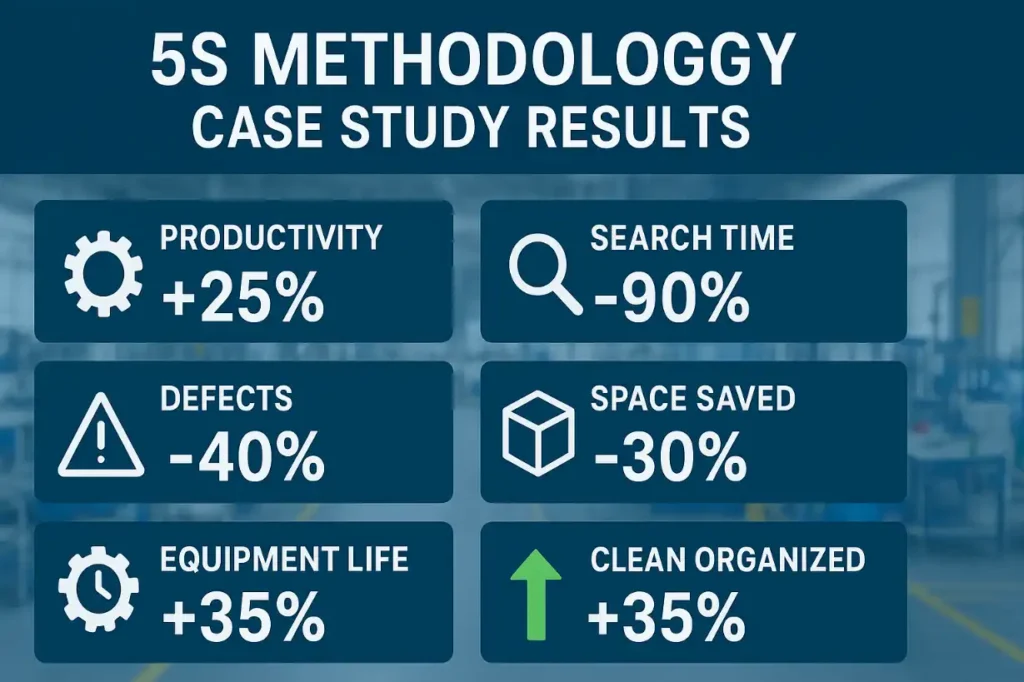
- Tool search: 20 min → 2 min (90% reduction!)
- Productivity: +25%
- Defects: 8% → 3%
- ROI: 2.5 months
- Monthly benefit: ₹2,00,000
Case Study 2: Textile Factory (Surat)
Company: 300 employees, ₹85 crore turnover
Investment: ₹3.5 lakh (12 weeks)
Results After 1 Year:
- On-time delivery: 65% → 92%
- Defects: 15% → 6%
- ROI: 4 months
- Annual benefit: ₹2.04 crore
Common Mistakes (और Solutions)
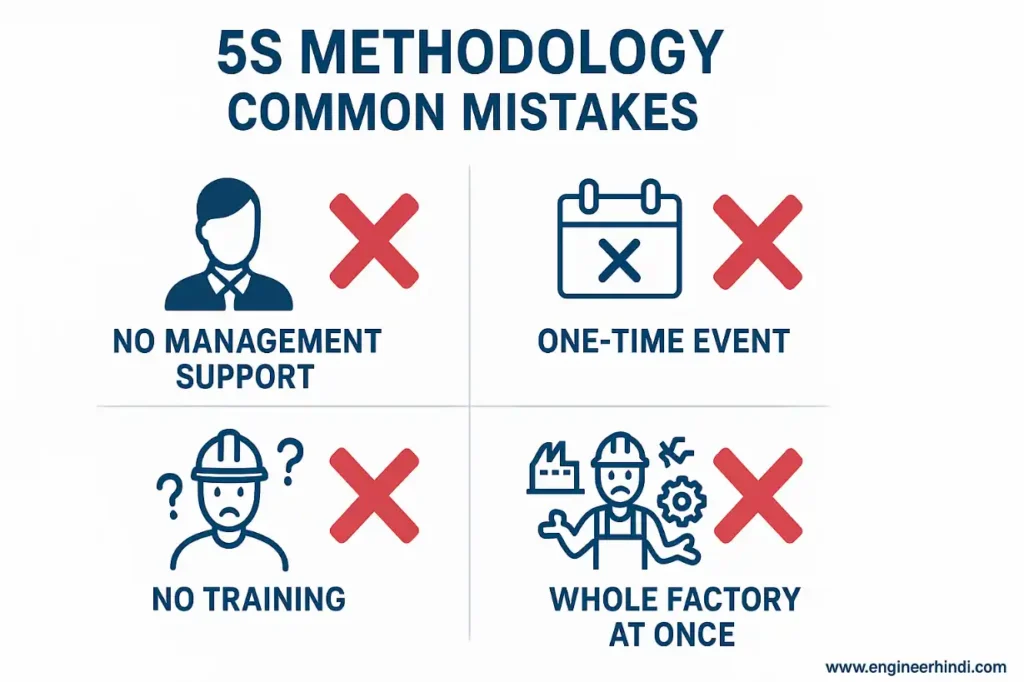
70% implementations fail होते हैं! Same mistakes बार-बार repeat होती हैं।
Top 5 Mistakes:
1. Management Support नहीं
Solution: ROI presentation दें, quick wins दिखाएं
2. पूरी Factory एक साथ
Solution: Pilot area approach – छोटा area से start
3. One-Time Event बना देना
Solution: Regular audits non-negotiable
4. Training Skip करना
Solution: Mandatory training for all (Management 2hr, Team 8hr, Operators 1hr)
5. Measurement नहीं करना
Solution: Before photos लें, progress track करें
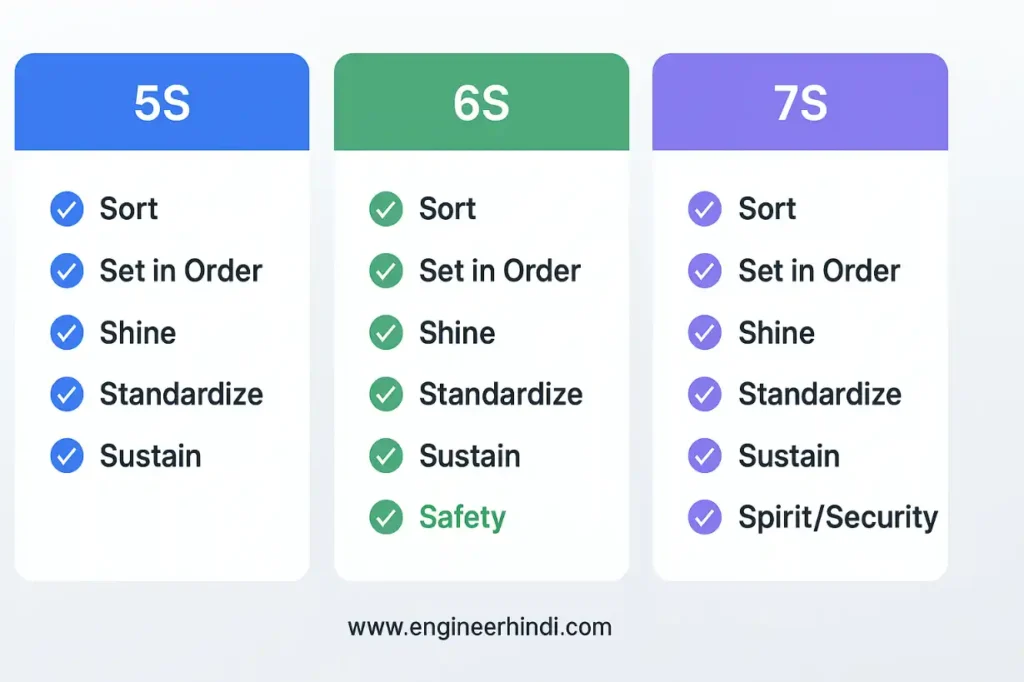
5S vs 6S vs 7S – Complete Comparison
तीनों में क्या अंतर है?
5S (Traditional)
- Sort, Set in Order, Shine, Standardize, Sustain
- General workplace organization
- All industries में use होता है
- Foundation level
6S = 5S + Safety
- Dedicated safety pillar add होता है
- High-risk industries: Chemical, Heavy machinery, Construction
- Indian factories में recommended
- Safety metrics specifically tracked
7S = 6S + Spirit/Security
- Team culture (टीम भावना) या Data security add
- Advanced level implementation
- Mature 5S culture के बाद
- IT companies में popular
| Feature | 5S | 6S | 7S |
|---|---|---|---|
| Steps | 5 | 6 (+Safety) | 7 (+Spirit) |
| Focus | Organization | + Safety | + Culture |
| Best For | General | High-risk | Advanced |
| Implementation | 12 weeks | 14 weeks | 16 weeks |
| Investment | ₹50K-1L | ₹75K-1.5L | ₹1L-2L |
Recommendation: Manufacturing में 6S implement करें (safety critical है)
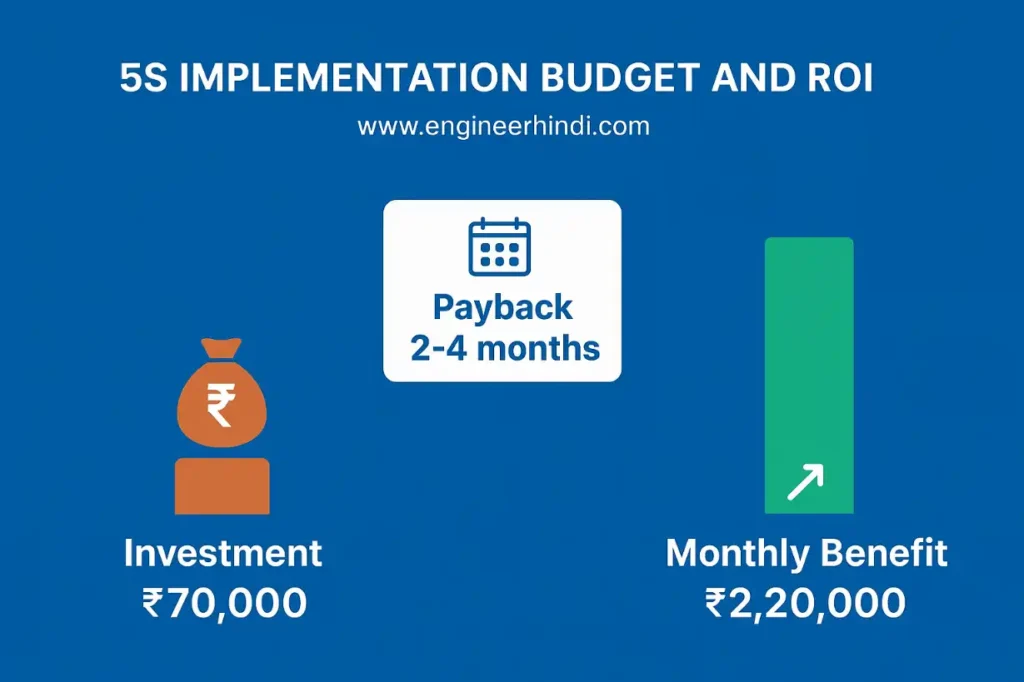
5S Budget और ROI Calculator
Small Unit Budget (50 employees):
| Item | Cost | Details |
|---|---|---|
| Training | ₹15,000-25,000 | All levels training (Management, Team, Operators) |
| Shadow boards | ₹20,000-40,000 | 5-8 boards professional quality |
| Labels/Signs | ₹5,000-10,000 | Floor marking, Labels, Boards |
| Cleaning Supplies | ₹5,000-10,000 | Initial equipment purchase |
| Miscellaneous | ₹5,000-10,000 | Red tags, Stationery, Photos |
| TOTAL | ₹50,000-95,000 | One-time investment |
Monthly Recurring Cost: ₹10,000-18,000 (Cleaning supplies, Awards, Maintenance)
Expected ROI Breakdown:
Monthly Benefits:
- Time saved: ₹1,25,000/month (Search time reduction)
- Quality improvement: ₹45,000/month (Defect reduction)
- Space optimization: ₹30,000/month (Better utilization)
- Safety improvement: ₹20,000/month (Accident reduction)
- Total Monthly Benefit: ₹2,20,000
Payback Period: 2-4 months
Annual ROI: 300-400%
5S Training Guide – Complete Program
3 Levels of Training:
Level 1: Awareness Training (All Employees – 1 hour)
Content:
- What is 5S?
- Why 5S is important?
- Benefits overview
- Everyone’s role
- Success stories
Method: Presentation + Video (30 min), Q&A (30 min)
Level 2: Detailed Training (5S Team – 4 hours)
Content:
- Each S की detailed explanation
- Implementation methods और tools
- Red tagging process
- Shadow board creation
- Audit process
- Hands-on practice
Method: Classroom (2 hours) + Practical (2 hours)
Level 3: Trainer Training (5S Champions – 8 hours)
Content:
- How to train others effectively
- Problem-solving techniques
- Change management
- Continuous improvement
- Audit कैसे conduct करें
Method: Advanced workshop + Certification
Training Materials:
- PowerPoint Presentation: 30-40 slides (Hindi + English)
- Handouts: Printed checklists, Forms, Guidelines
- Videos: Before/After examples (10-15 min)
- Case Studies: Indian factory examples
Training Effectiveness: Pre-test + Post-test (70% passing score), Certificate distribution, Refresher training every 6 months
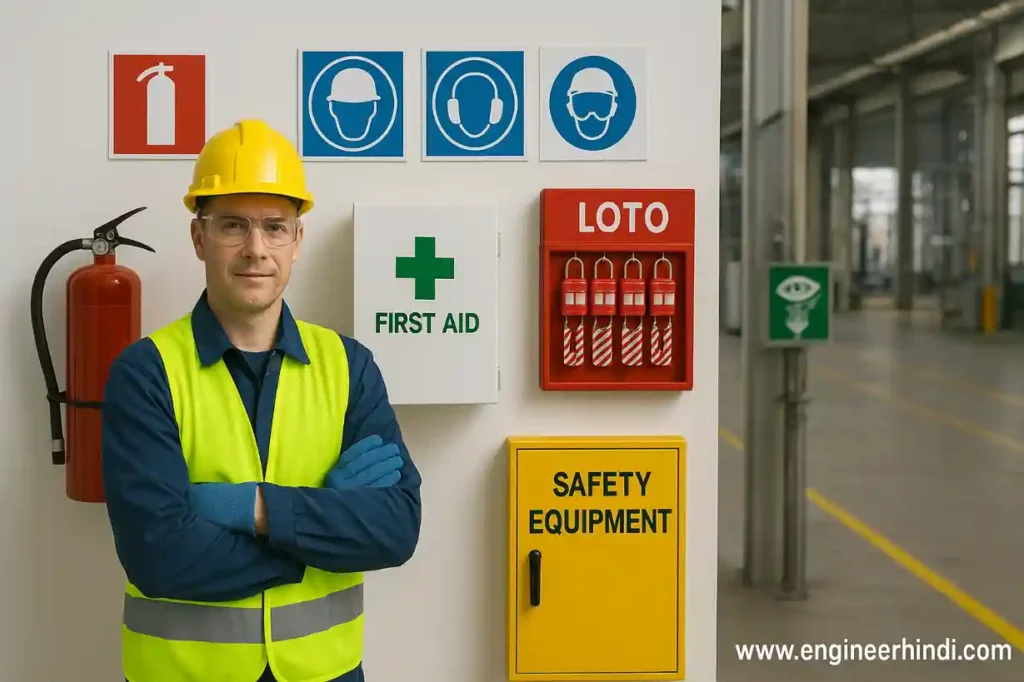
5S और Safety Connection (6S)
5S कैसे Safety Improve करता है:
| S | Safety Impact | Examples |
|---|---|---|
| Sort | Hazardous materials remove | Flammable items removed, Clear walkways |
| Set in Order | Emergency equipment accessible | Fire extinguishers visible, First aid accessible |
| Shine | Problems spotted early | Oil leaks identified, Prevent slips/falls |
| Standardize | Safety SOPs documented | Warning signs, Safety procedures |
| Sustain | Safety audits regular | Near-miss reporting, Safety culture |
6S = 5S + Dedicated Safety Pillar
6th S (Safety) में शामिल:
- Hazard Identification: Mandatory safety walks
- Risk Assessment: Systematic evaluation
- Safety Metrics: Accidents, Near-misses tracked
- PPE Standards: Personal Protective Equipment enforced
- Links to LOTO: Lock Out Tag Out procedures
- Work Permits: Hot work, Confined space permits
Result: Companies जो 6S implement करते हैं, उनमें accidents 50-70% कम होते हैं!
Benefits Of 5S Methodology
Key Benefits:
- Quality Improve होती है
- Rejection में कमी आती है
- Cost में कमी आती है
- Product Delivery Time improve होता है
- Safety बढ़ती है
- Accidents कम होते हैं
- लोग Motivate होकर काम करते हैं
Measurable Results:
- Productivity: +15-30%
- Space saving: 20-35%
- Defects: -30-50%
- Accidents: -50-70%
5s In Lean Manufacturing
5S System एक Lean Manufacturing Tool है। 5S का कार्य है कि जिन भी वस्तुओं का हमें कोई भी काम नहीं है, उन्हें दूर हटा दिया जाए।
Lean Manufacturing में Non Value Adding Activities को Process से दूर किया जाता है। 5S यही कार्य करता है – MUDA को हटाना।
Frequently Asked Questions (FAQs) – 5S से जुड़े सवाल
5S एक Japanese workplace organization methodology है जो workspace को organized, clean और efficient बनाती है।
5S का मतलब: Sort (छटाई), Set in Order (सुव्यवस्थित), Shine (स्वच्छता), Standardize (मानकीकरण), Sustain (अनुशासन)। यह manufacturing, offices, warehouses सभी में use होता है।
5S से productivity 15-30% बढ़ती है, quality improve होती है, और safety बढ़ती है। यह Lean Manufacturing का foundation है और 70+ countries में successfully use हो रही है।
Standard 5S implementation में 12 weeks लगते हैं। Small units (10-20 employees) में 8 weeks में भी complete हो सकता है।
Timeline depend करती है company size, area size, और team availability पर। Pilot area approach recommend है – एक छोटे area में पहले implement करें, success के बाद expand करें।
Phase-wise breakdown: Week 1-2 (Planning), 3-4 (Sort), 5-6 (Set in Order), 7-8 (Shine), 9-10 (Standardize), 11-12 (Sustain)।
Small unit (50 employees) के लिए अनुमानित : ₹50,000-95,000 one-time investment।
Breakdown: Training ₹15K-25K, Shadow boards ₹20K-40K, Labels/signs ₹5K-10K, Cleaning supplies ₹5K-10K। Medium unit (100-200): ₹1.5-2.5 lakh। Large factory (500+): ₹5-10 lakh। Monthly recurring: ₹10K-18K।
ROI period: 3-6 months। Expected monthly benefit: ₹2 lakh (small unit)। Investment mainly shadow boards, training, labeling, cleaning supplies में होता है।
तीन levels:
(1) Daily: Operator self-check (5 min) – हर shift के end में,
(2) Weekly: Supervisor audit (30 min) – detailed inspection,
(3) Monthly: Management audit (2 hours) – comprehensive review।
25-point checklist use करें (5 points per S)। Grading: A (100-125), B (85-99), C (70-84), D (<70)। Regular audits के बिना 95% implementations fail हो जाते हैं।
Audit results display करें, corrective actions track करें, और best areas को recognize करें।
Top 5 reasons:
(1) Management support नहीं होती (70% cases) – Without top management commitment, team demotivated हो जाती है,
(2) One-time event बना देते हैं – Sustain नहीं करते, regular audits नहीं होते,
(3) पूरी factory एक साथ – Overwhelmed हो जाते हैं, pilot area approach better,
(4) Training skip कर देते हैं,
(5) Measurement नहीं करते – Progress track नहीं होती। Solution: Pilot area approach, regular audits mandatory, proper training, management commitment जरूरी है।
5S, Lean Manufacturing का foundation है। Lean का goal है waste elimination और value creation। 5S यही करता है – workplace से सभ Non Value Adding Activities (MUDA) हटाता है। Organized workspace बिना lean principles implement नहीं हो सकते। 5S के बाद TPM (Total Productive Maintenance), Kaizen (Continuous Improvement), Six Sigma implement करना आसान हो जाता है। 90% successful lean companies पहले 5S implement करती हैं।
बिल्कुल हां! 5S principles universal हैं।
Home में: Kitchen organizing, Wardrobe management, Garage cleanup, Study table organization।
Office में: Desk organization, File management, Computer desktop cleanup, Meeting room management। Same 5 steps follow करें: (1) Unnecessary चीजें हटाएं, (2) हर चीज की fixed जगह, (3) Daily cleaning, (4) Standard routine बनाएं, (5) Habit बना लें।
Benefits: Time बचता है, stress कम होता है, productivity बढ़ती है।
Training options:
(1) Online courses: Udemy, Coursera पर 5S certification courses available,
(2) Productivity councils: National Productivity Council (NPC), Quality Council of India workshops organize करते हैं,
(3) Consultant companies: Manufacturing excellence firms training provide करती हैं,
(4) YouTube: Free basic training videos available,
(5) Books: “5S for Service Organizations” by Thomas L Jackson। Cost: ₹5K-25K per person।
Duration: 1-2 days। Certification helpful है job के लिए, resume में value add करता है।
पहला step: Management commitment secure करें। Without management support, 5S fail होगा। Steps:
(1) Top management को ROI presentation दें (3-6 months में payback),
(2) Budget approval लें (₹50K-1L),
(3) 5S Champion appoint करें (Senior person with authority),
(4) Pilot area select करें (small, high visibility),
(5) Implementation team बनाएं (5-7 members cross-functional)। यह foundation work critical है।
Time investment: 1-2 weeks proper planning में।
Small business (10-20 employees) approach:
(1) Low-budget start: DIY shadow boards (₹2-3K), Floor marking tape (₹1K), Basic training (YouTube), Total: ₹15-20K,
(2) Owner involvement: Owner ko 5S Champion banna chahiye,
(3) Quick wins focus: Tool organization se start करें – immediate impact,
(4) Simple documentation: Photos + 1-page checklist enough,
(5) Weekly review: 15-min team meeting Friday ko। Timeline: 6-8 weeks complete implementation।
ROI faster: 2-3 months में benefits visible। Small होने का advantage है – quick decisions, faster implementation!
pls. mail me – nidhibaliyan09@gmail.com
Please mail me at production@andhraexpanded.com
Please provide me 5S PDF file
Please mail me in PDF hindi
please mail us
sunilfuliya505@gmail.com
Tell me the complete details about the quality assurance.
Please mail me PDF 5S
email to my email id pdf